UAE strengthens its presence at Tokyo Game Show 2026, with Red Dunes Games deploying one of the largest booths in the pavilion
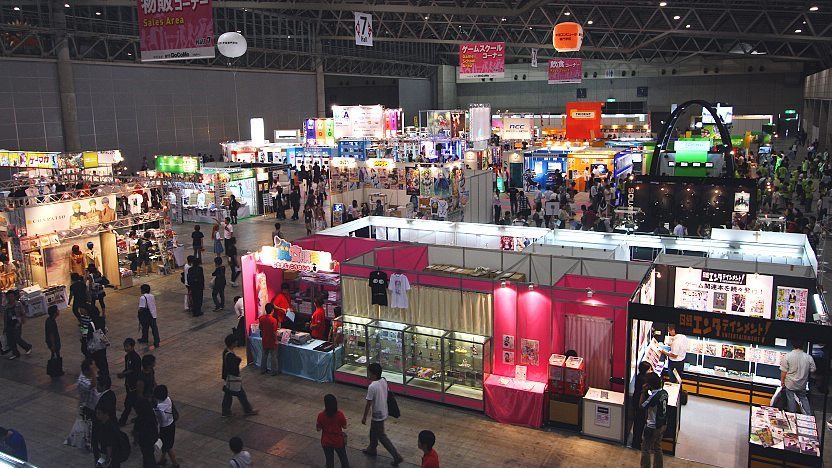
Abu Dhabi-based publisher Red Dunes Games has significantly expanded its footprint at Tokyo Game Show 2026, presenting nine projects at the show and bringing together partner studios from Asia and Europe at its booth. Just a few years ago, the company’s founders were attending Tokyo without any exhibition space of their own; today, their booth at Makuhari Messe has become one of the most prominent in the hall. The event reflects a broader trend: the UAE is steadily consolidating its position at one of the world’s key gaming industry venues.
From meetings without a dedicated space to the “second-largest” booth in the hall
In 2023, Red Dunes co-founders Sultan Al Darmaki and Mohamed Al Janabi attended Tokyo Game Show without a booth. Their entire programme consisted of business meetings with developers and publishers, and efforts to establish a foothold in the Japanese market.
By 2026, the picture had changed dramatically. Hall 7 of the Makuhari Messe convention centre now hosts one of the largest booths in the section: rows of screens, hands-on demo zones, and international teams united under the banner of the Emirati publisher.
The UAE Ambassador to Japan on the company’s growth and the country’s “footprint” at the show
Sihab Al Fahim, UAE Ambassador to Japan, notes that he has been following Red Dunes’ development at Tokyo Game Show for the past five years. In his view, the growth of the company and the broader UAE gaming ecosystem has been impressive. “I saw their first participation, when they had one small spot, and today they are hosting many companies and have the second-largest booth in this hall,” the diplomat remarked.
Al Fahim attributes Red Dunes’ success to the broader strengthening of Emirati and Emirati-themed projects on the global stage.
The booth as a showcase of Abu Dhabi, with hospitality and inspiration drawn from the souks of Mina Zayed
The booth’s design concept deliberately emphasises the company’s roots. The Red Dunes team sought to convey the experience of visiting Abu Dhabi: a sense of hospitality, warmth, and wonder. The visual design draws inspiration from the traditional souks of the Mina Zayed district.
“When people walk into our booth, they leave with something meaningful — whether tangible or intangible,” explained Mohamed Al Janabi.
Nine Tokyo Game Show 2026 announcements from Red Dunes Games
The company brought a core slate of nine gaming projects to the show. Among the announced titles:
- Port of Jumanah
- Zozo and the Lost Dreams
- Nightmare Circus
- Blades of Mirage
- LightSup!
- Katuba’s Poacher
- Samurai Pizza Cats: Blast from the Past!
- Hell Heart Breaker
The ninth project was announced as part of the show’s exhibition programme.
Partnerships spanning Asia to Europe and the studios behind Red Dunes’ projects
The lineup clearly demonstrates the publisher’s international reach. Blades of Mirage is being developed in collaboration with Indonesian studio Agate, LightSup! is being created by Thai studio BugBlio Studio, and Katuba’s Poacher is led by South Korean solo developer Joe Yu. Dutch studio Blast Zero is responsible for Samurai Pizza Cats: Blast from the Past!
The Red Dunes booth has effectively become a gathering point for teams from multiple countries, all working under the unified banner of the Emirati publisher.
Samurai Pizza Cats return in game form, and the Japanese market’s reaction was unexpected
Samurai Pizza Cats: Blast from the Past! is a 2D action RPG based on the 1990 anime Kyatto Ninden Teyandee. The scale of interest from the Japanese audience came as a surprise to Red Dunes. “We knew the anime had fans, but we did not expect the response in Japan to be this strong,” admitted Al Janabi. The project has become one of the most anticipated titles under the company’s banner.
“Not to be confined to a single genre” and a focus on mechanics
Al Janabi emphasises that the company should not be associated with any single genre. The Red Dunes portfolio is deliberately diverse, with a core philosophy of “playability and mechanics first.” This principle runs throughout the lineup, where the roguelike Hell Heart Breaker sits alongside a 2D action RPG and projects of an entirely different nature.
At shows of Tokyo Game Show’s calibre, projects of varying formats and scales always coexist: compact indie roguelikes, narrative action RPGs, reimaginings of classics, large online games, and MMORPG titles with years of history. For a publisher, participation in the show is above all a means of capturing the attention of an audience that discovers characters and gameplay right there at the screen. But player interest is not limited to mechanics alone. As broader industry data shows, a significant share of online game audiences are drawn in by in-game rewards: starter packs, promo codes, free loot boxes, and holiday giveaways.
A distinct niche has formed around this, where players track current bonuses in online games. For developers, it is a practical tool for acquisition and retention of new players. Studios from the UAE are also employing bonus mechanics, drawing on the experience of Asian and Western peers and exploring different paths to audience growth. Red Dunes applies the same flexibility to its broader growth strategy.
The next step toward larger-scale games and work with international IP
Sultan Al Darmaki explains that the company started with smaller projects, but as its experience and partner network have grown, it is preparing for games of considerably greater scope. Behind the scenes, work is already underway with “several beloved international IP,” though details have yet to be disclosed.
The Yas Marina Circuit track in Gran Turismo 7 as an example of the UAE’s entry into the Japanese gaming ecosystem
Another marker of the growing convergence between the two countries in the gaming space was the addition of the Yas Marina Circuit track to Gran Turismo 7 in December 2025. According to Ambassador Al Fahim, negotiations with Polyphony Digital took approximately two and a half years, with support from Abu Dhabi Gaming and UAE leadership. “This is not just a simulator — it is a game that puts our country on the map,” the diplomat noted.
The show’s trend: major publishers scaling back and “reviving” legacy IP
Observing the Tokyo Game Show 2026 exhibitions, Al Darmaki identifies a shift: some major publishers are moving away from a constant focus on AAA titles and returning to projects of more manageable scope, experimenting with the revival of classic IP and the launch of new ones. In his view, the boundary between indie and blockbuster matters less than a compelling idea and the ability to engage a broad audience.
How the changing rules of the game work in Red Dunes’ favour
The expansion of Red Dunes’ booth and international lineup at TGS 2026 fits naturally into this industry shift. The company, which originally built its portfolio around compact yet distinctive projects, finds itself in alignment with the direction now being chosen by market giants as well. “We see no limits for the UAE, and we are confident that everything we put our efforts into can be achieved,” Al Fahim concluded.