Why Dubai Property Investors Are Looking at Abu Dhabi
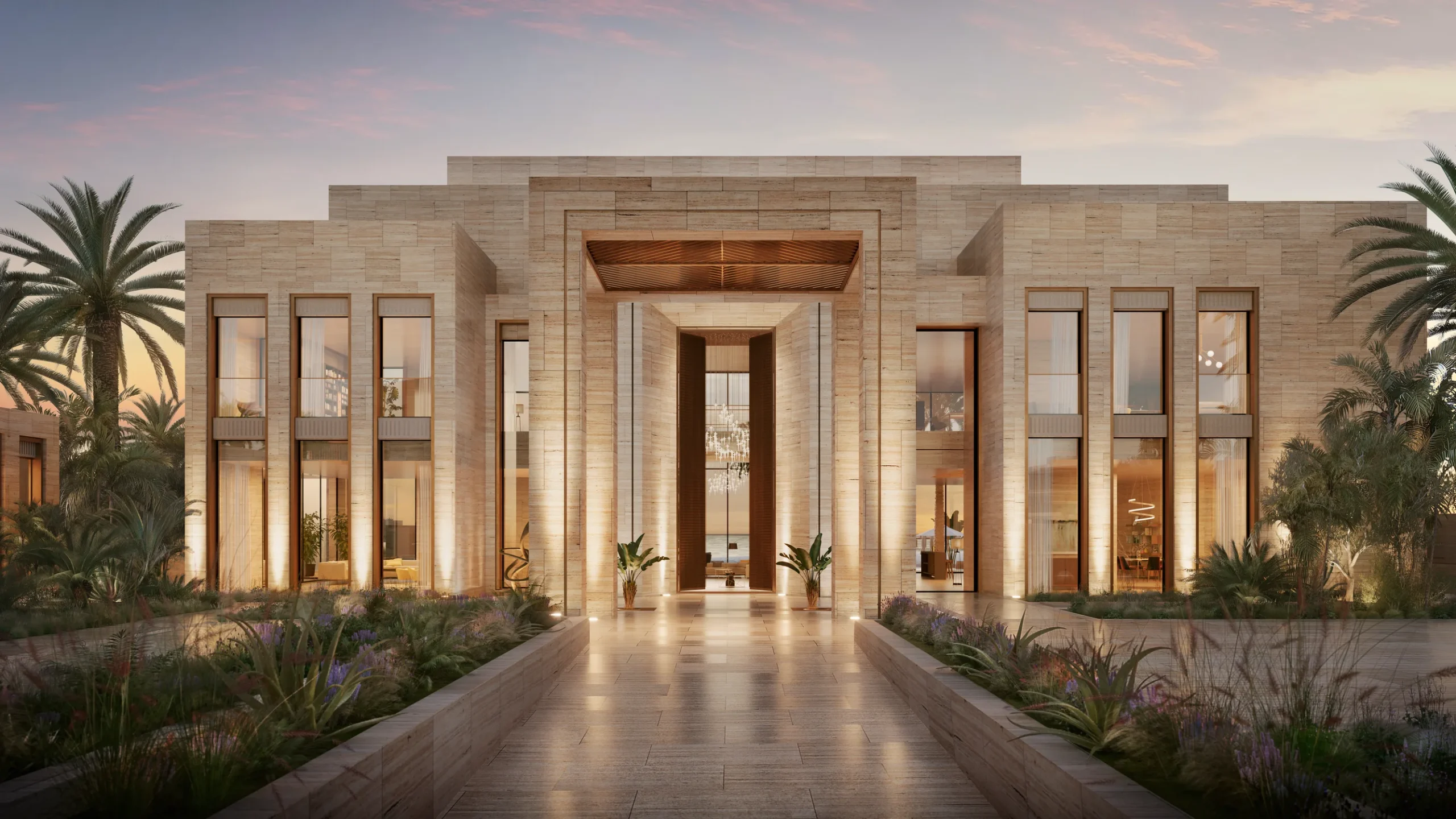
For years, Dubai stood as the undisputed centre of gravity for property investment in the UAE. Its skyline, transaction volumes and global profile made it the natural first stop for anyone looking to place capital in Gulf real estate. That picture is shifting. A growing number of investors who built portfolios in Dubai are now turning their attention toward Abu Dhabi, drawn by pricing advantages, stronger capital appreciation forecasts and a market structure that rewards patience over speculation. Understanding why this shift is happening reveals as much about the maturing of Dubai’s market as it does about Abu Dhabi’s rising appeal.
A Market Cycle Moving in Two Directions
Dubai’s residential market has spent the past several years in a high-velocity growth phase, and 2026 data continues to reflect solid overall demand. Yet several major brokerages now describe the city as entering a more selective, two-speed phase, where prime villa communities keep outperforming while apartment-heavy districts see growth normalise. New supply arriving later in the year is also encouraging some buyers to slow their pace and be more selective about entry points.
Abu Dhabi is moving through a different part of the cycle. Annual price growth in the capital has outpaced Dubai’s for several consecutive quarters, supported by a development pipeline that remains far more controlled. Where Dubai’s growth is broad but increasingly uneven, Abu Dhabi’s is narrower but more consistent, a distinction that matters to investors thinking beyond a single transaction cycle.
The Price Gap Investors Cannot Ignore
The figure that keeps surfacing in market commentary is the price differential between the two emirates. Prime Abu Dhabi real estate continues to trade at roughly 30 percent below comparable Dubai assets, even in similarly positioned waterfront and master-planned communities. For an investor working with a fixed budget, that gap can mean the difference between a mid-tier unit in Dubai and a larger, better-located home in the capital.
This discount is not a sign of a weaker market. Abu Dhabi carries the added weight of being the seat of government and home to the country’s sovereign wealth, alongside a development pipeline shaped deliberately around designated investment zones rather than citywide expansion. That combination of quality and controlled supply is a large part of why analysts increasingly describe Abu Dhabi property as undervalued relative to its fundamentals.
Rental Yields Are Closing the Distance
Dubai has long been the yield leader, and its short-term rental market, tourism volume and steady expat inflow keep that reputation intact, with average gross yields for apartments still sitting in the seven to eight percent range. Abu Dhabi, however, is no longer far behind. Communities such as Al Reef, Al Ghadeer, Masdar City and Al Reem Island are regularly posting yields of eight percent or higher, putting the capital ahead of Dubai in specific segments rather than merely trailing it.
For investors comparing the two markets side by side, the yield gap that once made Dubai the obvious choice has narrowed to the point where Abu Dhabi’s lower entry prices, combined with comparable or better rental returns, can produce a stronger net return on capital in several sub-markets.
A Development Pipeline Built on Discipline
One of the more structural differences between the two markets is supply discipline. Dubai’s pipeline includes well over 100,000 units slated for delivery in the coming years, a volume that supports transaction activity but also puts pressure on rental rates and resale values as new stock enters the market. Abu Dhabi’s approach has been markedly different, with development concentrated in a smaller number of premium, master-planned zones rather than spread across the city.
This is where large-scale, master-planned communities have become central to Abu Dhabi’s investment case. Waterfront developments on islands such as Saadiyat, Yas and Reem continue to draw international buyers because they combine limited supply with long-term infrastructure investment, rather than relying on volume alone to sustain demand.
Government Backing and a Widening Investor Base
Abu Dhabi’s growth story is also distinct in who is driving it. Non-oil GDP growth of 7.6 percent in 2025 points to an economy diversifying well beyond hydrocarbons, with finance, renewable energy and sovereign investment platforms all expanding. Investors from more than 100 nationalities are now active in the market, supported by a regulatory framework regarded as one of the most transparent and investor-friendly in the region.
Etihad Rail’s continued expansion, linking Abu Dhabi to Dubai and the wider GCC network, is also reshaping how investors think about geography. As travel time between the two emirates keeps shrinking, the practical distinction between living in Dubai and investing in Abu Dhabi becomes far less significant than it once was.
Residency and Long-Term Certainty
Pricing and yield are only part of the calculation. Long-term residency options tied to property ownership have become an increasingly important factor for investors deciding between the two emirates. Abu Dhabi’s Golden Visa framework grants renewable long-term residency to buyers who meet the qualifying investment threshold, giving property purchases a practical value well beyond capital appreciation. For investors already living in Dubai or elsewhere in the region, the ability to secure a stable, long-term foothold in the capital adds a dimension that a purely transactional purchase in a high-turnover market cannot always match.
This is part of a broader pattern across the UAE, where residency-linked investment has become a deciding factor rather than an afterthought. Buyers weighing Dubai against Abu Dhabi increasingly factor in not just where a property will appreciate fastest, but where ownership secures the most durable long-term standing in the country.
Where Off-Plan Property Fits Into the Strategy
Much of the renewed interest from Dubai-based investors is concentrated in off-plan property for sale in Abu Dhabi, where entry prices remain attractive relative to projected completion values. Buying off-plan in a supply-constrained market carries a different risk profile than doing so in a market absorbing six-figure unit deliveries each year. In Abu Dhabi’s designated investment zones, developers such as LEAD Development are building master-planned communities engineered around long-term livability rather than short-term absorption, an approach that has historically supported steadier price appreciation through the construction cycle.
For investors accustomed to Dubai’s fast-moving off-plan launches, the capital’s more measured release schedule can initially feel unfamiliar. In practice, it is precisely that discipline, fewer units, phased releases and clearer long-term demand assumptions, that has made off-plan positions in Abu Dhabi increasingly attractive over the past two years.
What the Shift Means for Dubai-Based Investors
None of this suggests Dubai is losing its appeal. It remains one of the most liquid and internationally visible property markets in the world, and for buyers prioritising short-term rental income or fast resale, it still holds clear advantages. What has changed is that Abu Dhabi is no longer viewed simply as Dubai’s quieter neighbour. It has become a market with its own investment thesis, one that increasingly competes for the same pool of capital.
Investors who diversify across both emirates are, in effect, positioning for two different phases of the same broader UAE growth story: Dubai’s momentum and liquidity, paired with Abu Dhabi’s discount, discipline and structural runway. A portfolio built across both cities can capture upside from Dubai’s continued transaction volume while reducing exposure to the supply pressure building in some of its more saturated segments.
The practical implication for anyone actively deploying capital in Dubai is straightforward: overlooking Abu Dhabi at this stage of the cycle means missing a market that is, by several measures, still catching up to where its fundamentals suggest it should be.
The Investment Case for Abu Dhabi’s Off-Plan Market
The convergence between Dubai and Abu Dhabi property values is unlikely to close overnight, but the trend line is clear enough that waiting carries its own cost. As pricing gaps narrow and Abu Dhabi’s profile continues to rise on the global stage, the window for entering at today’s relative discount will not stay open indefinitely. For investors weighing where UAE capital is working hardest right now, Abu Dhabi’s combination of controlled supply, rising yields and government-backed growth makes a compelling case for a closer look.