
Why Townhouses Hold Their Value Better Than Other Dubai Properties
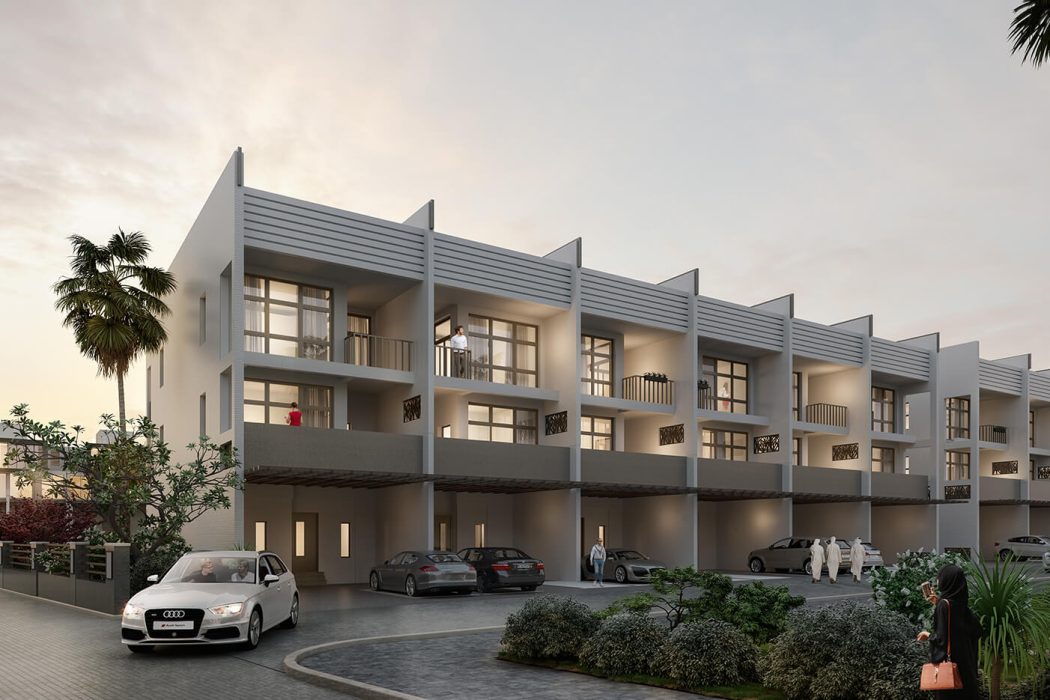
Dubai’s skyline is famous for glass towers, but some of the smartest long-term property decisions in the city are being made at ground level. Townhouses have quietly become one of the most resilient segments of the Dubai housing market, consistently posting stronger price stability than the apartment towers that dominate the city’s inventory. For buyers weighing where to place their money for the next five, ten, or twenty years, understanding why townhouses tend to hold their value is essential before signing anything.
This is not a passing trend. It is the result of structural forces in the market, from limited land availability to a shift in who is actually buying property in Dubai today. Anyone comparing a townhouse to an apartment or a villa should look past the initial price tag and consider what happens to that investment five years down the line.
What “Holding Value” Actually Means
A property that holds its value is one that resists sharp price corrections during market slowdowns and recovers quickly when demand returns. It is not the same as a property that rises the fastest during a boom. Some apartment segments in Dubai have posted rapid short-term gains, only to see prices soften again once new supply floods the market. Townhouses, by contrast, tend to move more gradually but with far less downside risk, which is exactly what long-term buyers and families should be looking for.
Recent market data supports this pattern. Townhouse transaction values across Dubai rose by more than 15 percent year on year in early 2026, outpacing the growth recorded in several apartment categories over the same period. During the same window, when apartment prices softened on a quarterly basis, townhouse and villa pricing proved noticeably more resilient, slipping only marginally by comparison. That gap between segments is the clearest evidence of value retention in action.
A Supply Problem That Favors Townhouse Owners
Dubai’s development pipeline is overwhelmingly weighted toward apartments. The vast majority of units currently under construction across the emirate are high-rise apartments, while low-density, family-style housing such as townhouses makes up a much smaller share of new supply. Building a gated townhouse community requires significantly more land per unit than a residential tower, and under Dubai’s long-term urban planning framework, that land is becoming harder to secure in well-connected locations.
This imbalance works directly in favor of existing townhouse owners. When new apartment inventory is released in large volumes, competition among sellers increases and prices in that segment can soften. Townhouse supply, by comparison, stays comparatively tight, which limits the kind of oversupply-driven price drops that occasionally affect apartment-heavy districts.
End Users Are Replacing Short-Term Speculators
One of the most important shifts in the Dubai property market over the past few years has been the growing dominance of end users, meaning buyers who intend to actually live in the home rather than flip it for a quick profit. Rising rents and longer residency timelines have pushed more long-term residents toward ownership, and families in particular are gravitating toward townhouses for the space, privacy, and community feel that apartments cannot easily replicate.
This matters enormously for price stability. Markets driven by speculation tend to be volatile, since investors are quick to sell the moment sentiment shifts. Markets anchored by end users behave differently. A family that has moved into a townhouse to raise children near good schools and parks is not selling on the first sign of a market dip. That kind of ownership behavior creates a floor under prices that speculative apartment buying often lacks.
Family-Oriented Design Reduces Turnover
Townhouses are built around a different lifestyle proposition than apartments. Private entrances, small gardens, multiple bedrooms, and access to shared community amenities such as parks, pools, and walking trails are designed for households planning to stay for years rather than months. That longer average holding period reduces the frequency of resale, which in turn limits the kind of sudden price undercutting that can occur when many similar units hit the market at once.
Gated townhouse communities also tend to retain their character over time in a way that dense apartment towers sometimes struggle with. Established communities with mature landscaping, reliable service charges, and a settled resident base continue to attract buyers years after the original launch, which supports resale values well beyond the initial handover period.
The Middle Ground That Apartments and Villas Cannot Match
Townhouses sit in a pricing and lifestyle position that neither apartments nor standalone villas can fully replace. They offer more space and privacy than an apartment at a price point well below a full villa, which keeps them accessible to a wide pool of end users, including many families relocating to Dubai for the first time. That breadth of demand is itself a form of protection, since a property type with a large and consistent buyer pool is far less likely to see prices collapse than a narrower, ultra-luxury niche.
For buyers specifically evaluating whether to buy a townhouse in Dubai, this middle-ground positioning is often the deciding factor. It allows a household to secure a family-sized home in a well-planned community without stretching into villa-level budgets, while still benefiting from the value stability that comes with low-density housing.
How Townhouses Perform When the Market Slows
Every real estate market eventually cools after a period of rapid growth, and Dubai is no exception following the exceptional run seen in recent years. What separates a resilient asset from a risky one is how it behaves during that cooling period. Recent quarterly data shows apartment transaction rates declining noticeably more than villa and townhouse rates during the same period, a gap that speaks directly to the comparative stability of low-density housing when overall market momentum eases.
This resilience is not guaranteed forever, and no property type is entirely immune to broader economic shifts. However, the structural factors behind it, namely limited land, family-driven demand, and longer holding periods, are not short-term conditions. They are built into how Dubai is planning its future growth, which gives buyers reasonable confidence that the pattern will continue.
What to Look for Before Choosing a Townhouse
Not every townhouse community will perform equally well, so due diligence still matters. Buyers should prioritize established or well-master-planned communities with proven infrastructure, reliable access to schools and retail, and a developer with a track record of timely handovers. Proximity to major road networks and business hubs also plays a meaningful role in long-term demand, since end users increasingly weigh commute times alongside lifestyle amenities.
It is also worth examining a community’s mix of ready versus off-plan supply. Communities where the surrounding area still has significant undeveloped land may face more competition from future phases, while more established, largely built-out communities tend to offer greater price predictability over time.
Building a Property Strategy That Lasts
The case for townhouses is not built on hype or short-term price spikes. It rests on a combination of limited land, a buyer base increasingly made up of families planning to stay, and a pricing position that appeals to a wider range of households than either apartments or villas alone. Those are the same fundamentals that tend to protect property values through market cycles, not just during the good years.
For anyone comparing property types in Dubai today, the data points in a consistent direction. Townhouses have delivered steadier performance through both the recent boom and the more measured conditions of 2026, making them a strong candidate for buyers who care less about chasing the fastest short-term gain and more about protecting their investment for the long haul.


