Why Do My Gums Bleed After a Dental Cleaning? What’s Normal and What’s Not
Introduction
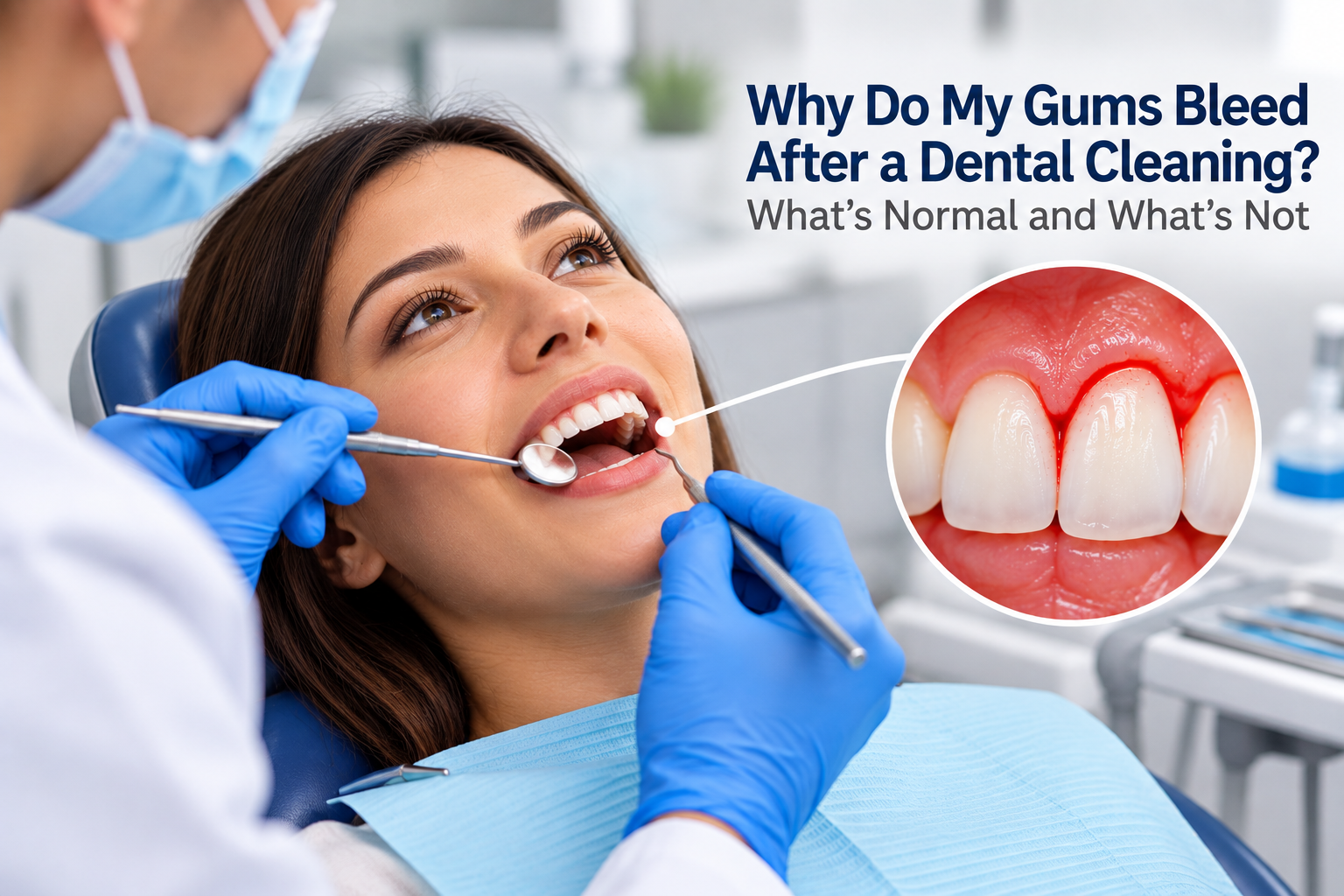
You brush your teeth the evening after a dental cleaning, spit into the sink and see pink. Your teeth were supposed to be cleaner and healthier, so why are your gums bleeding? In most cases, a little bleeding after a professional cleaning is a normal part of healing, especially if it has been a while since your last visit. Sometimes, though, bleeding is a sign that something needs a closer look. This article explains why gums bleed after a dental cleaning, what normal recovery looks like, which signs need a call to your dentist, and how to look after your gums in the days that follow.
Table of Contents
- Why Gums Bleed After a Cleaning
- What Normal Bleeding Looks Like
- Things That Can Make Bleeding More Noticeable
- Signs That Are Not Normal
- Caring for Your Gums in the First Few Days
- Why Bleeding Usually Eases With Regular Visits
- What to Tell Your Dentist Before a Cleaning
- Conclusion
- Contact Us
Why Gums Bleed After a Cleaning
Healthy gums are firm, pale pink and rarely bleed. Gums that have been living next to plaque and tartar for months are a different story. The bacteria in those deposits cause inflammation, which brings extra blood flow to the area and makes the gum tissue soft and fragile. This early stage of gum disease is called gingivitis, and many people have it without realising.
During a cleaning, your dentist or hygienist removes tartar from the tooth surface, including the part tucked just under the gumline. Instruments have to reach into that small space between gum and tooth. When the gum is already inflamed, even gentle contact can cause some bleeding. This is why teeth cleaning can leave a little blood on your brush afterwards, even when it has been done gently.
Once the tartar is gone, the gum is left slightly tender, a bit like skin under a plaster that has just been peeled off. It needs a few days to settle.
So in many cases, the bleeding is not caused by the cleaning itself. The cleaning simply reveals inflammation that was already there.
What Normal Bleeding Looks Like
After a routine scale and polish, these are all common and usually settle on their own:
- Light pink spotting when you brush, floss or spit, for one to three days
- Mild tenderness along the gumline, especially when eating
- Some sensitivity to cold drinks or air, since tartar was covering parts of the tooth
- Slightly puffy gums that gradually tighten
If it has been a year or more since your last cleaning, expect a little more of all of these. Heavier tartar means more work under the gumline, and more inflamed tissue to heal.
Over the next week or two, as the inflammation calms down, your gums often start to look firmer and less red. Many patients notice their gums bleed less when brushing than they did before the cleaning. That is a good sign that healing is on track.
Things That Can Make Bleeding More Noticeable
Some people bleed more easily than others after a gum cleaning. Common reasons include:
- A long gap between cleanings. More build-up usually means more inflammation.
- Deep cleaning. If you had root planing for gum pockets, bleeding and tenderness can last a few days longer than after a standard clean.
- Deep cleaning teeth below the gumline is usually recommended only when gum pockets have formed, and your dentist will explain why it is needed before starting.
- Blood-thinning medicines. Aspirin, warfarin and several other medicines slow clotting. Some supplements, such as fish oil or high-dose vitamin E, may have a similar effect.
- Pregnancy. Hormone changes make gums more reactive to plaque.
- Diabetes. When blood sugar is poorly controlled, gums tend to be more inflamed and slower to heal.
- Smoking and shisha. These reduce blood flow to the gums, which can hide bleeding for years. When someone cuts down or quits, their gums sometimes bleed more at first. That is often a sign the tissue is recovering, not getting worse.
None of these means you should skip a cleaning. They simply help your dentist plan and set expectations.
Signs That Are Not Normal
Contact your dentist if you notice any of the following:
- Bleeding that continues beyond about a week, or gets heavier instead of lighter
- Heavy bleeding that does not stop after 10 to 15 minutes of firm pressure with clean, damp gauze
- Swelling that keeps increasing, or a lump on the gum
- Pus, a foul taste, or pain that throbs rather than fades
- Fever or feeling generally unwell after the visit
- Gums that bleed on their own, without brushing or eating
Bleeding gums alongside easy bruising, frequent nosebleeds or unusual tiredness should also be mentioned to your doctor. Occasionally, gum bleeding is the first thing people notice when a general health condition affects clotting. This is uncommon, but it is worth checking rather than guessing.
Caring for Your Gums in the First Few Days
Keep brushing. It is tempting to avoid the area that bleeds, but leaving plaque behind lets the inflammation return. Use a soft-bristled brush and gentle, small circular movements along the gumline.
Floss carefully. Slide the floss gently between teeth and curve it around each tooth. Avoid snapping it down onto the gum.
Rinse with warm salt water. Half a teaspoon of salt in a glass of warm water, swished a few times a day gently, can soothe tender gums.
Go easy on your food. For a day or two, skip very hot drinks, heavily spiced dishes and crunchy snacks like chips or nuts, which can irritate the gumline. Lukewarm, softer meals are more comfortable.
Avoid smoking and shisha for at least a day or two, and longer if you can, to give the tissue a better chance to heal.
Manage discomfort sensibly. If you need pain relief, ask your dentist or pharmacist which option suits you, particularly if you take other medicines or have been told to avoid certain painkillers.
Why Bleeding Usually Eases With Regular Visits
Bleeding after the first cleaning in a long time is often the heaviest a patient will experience. Once the gums have healed and you keep plaque under control at home, there is far less inflammation for the next cleaning to disturb.
It becomes a cycle that works in your favour: regular cleanings keep inflammation low, and healthier gums make cleanings more comfortable. Your dentist will suggest a cleaning schedule that fits the health of your gums. The teeth cleaning price can vary depending on whether you need a routine scale and polish or treatment below the gumline, so it is worth asking about this when you book.
What to Tell Your Dentist Before a Cleaning
A quick conversation at the start of your appointment helps your dental team plan your care. Mention:
- Any medicines you take, including blood thinners, supplements and herbal products
- Health conditions such as diabetes, heart problems or bleeding disorders
- Pregnancy, or if you might be pregnant
- Any past experience of heavy bleeding after dental treatment or minor cuts
- Whether your gums already bleed when you brush
Please do not stop any prescribed medicine before a cleaning unless your doctor has told you to. For routine cleanings, most people on blood thinners can continue as normal, but your dentist and doctor can advise on your specific situation.
Conclusion
Seeing a little blood after a dental cleaning is usually part of normal healing. It tends to reflect gum inflammation that was already present, and it typically settles within a few days as the gums recover. Keep brushing gently, clean between your teeth, rinse with warm salt water and give your gums time. Bleeding that lasts beyond a week, gets heavier, or comes with swelling, pus, or fever is a reason to call your dentist. With regular cleanings and steady home care, most people find their gums bleed less and less over time.
Contact Us
Our JLT clinic is easy to get to if you would like your case to be assessed in person. If you have questions about the teeth cleaning price for your visit, our team can explain it once your gums have been checked.
Magnum Dental Clinic – JLT
Address: Shop No. 2, Indigo Tower, Cluster D, Al Thanyah Fifth, Jumeirah Lakes Towers, Dubai, United Arab Emirates.
Phone: +971 54 452 2332