Chest Pain in Your 20s and 30s: When It’s the Heart, and When It Isn’t
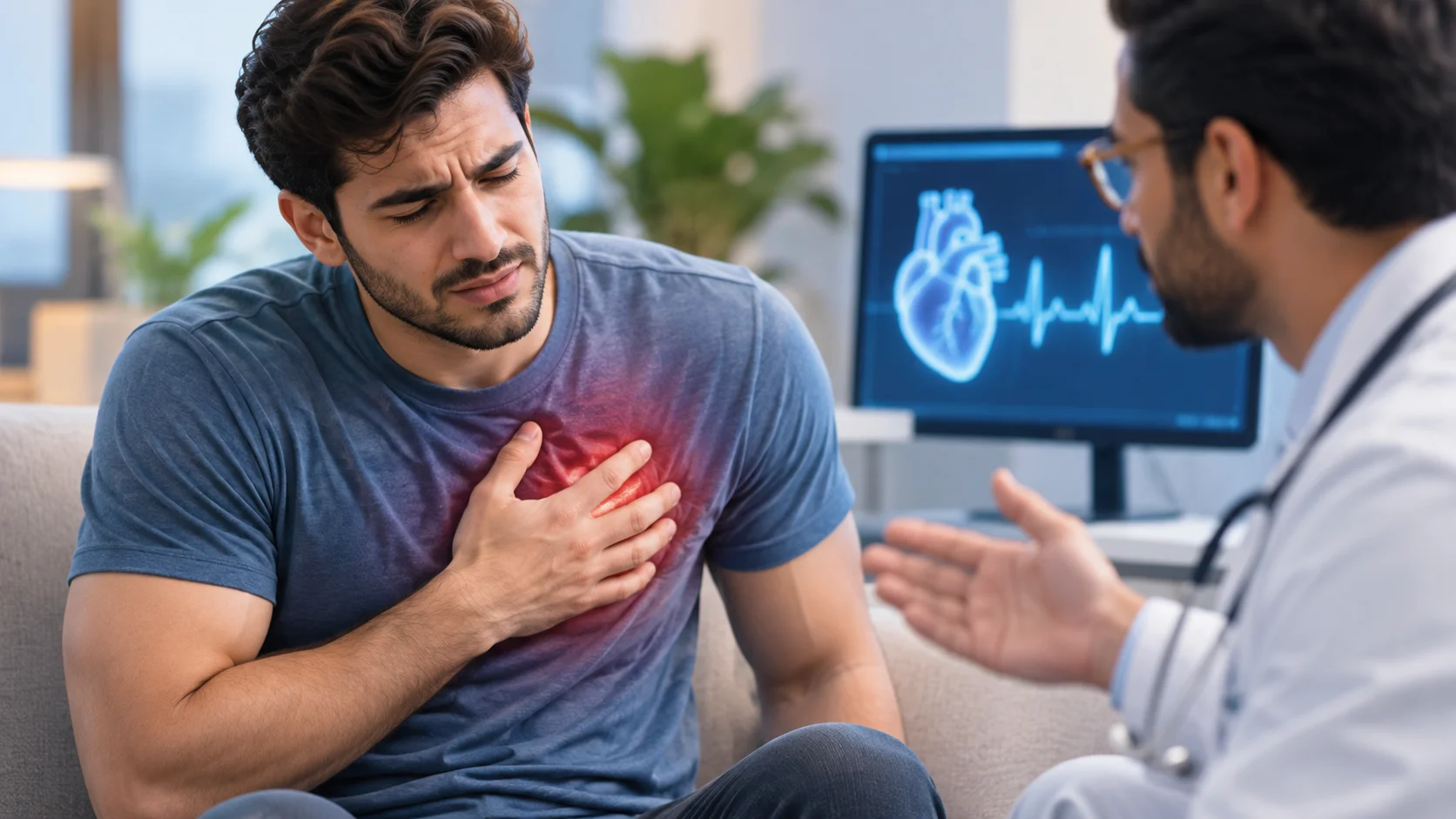
When a 28-year-old feels chest pain, the first thought is often a heart attack. In most cases, it is something far less serious. But “young” does not mean “immune”, and a small number of causes in this age group are important to recognise. Knowing the difference helps people neither panic unnecessarily nor ignore a real warning.
The Most Common Causes Are Not the Heart
In younger adults, chest pain most often comes from the chest wall, such as strained muscles or inflamed cartilage where the ribs meet the breastbone. Pain that is sharp, localised and worse when you press on the area or move is typical. Acid reflux causes burning pain, often after meals or when lying down. Anxiety and panic attacks can cause chest tightness with a racing heart, breathlessness and tingling. Lung problems, such as a chest infection or a collapsed lung, are other possibilities.
When The Heart Is the Cause
Heart attacks in people under 40 are uncommon, but they do happen, and they are more likely with smoking or shisha, diabetes, very high cholesterol (sometimes inherited), high blood pressure, a strong family history or stimulant drug use. Symptoms are the same as at any age: pressure or tightness in the chest, pain spreading to the arm, jaw or back, sweating, nausea and breathlessness. If these appear, call 998.
Other heart causes in this age group include myocarditis, inflammation of the heart muscle often after a viral illness, and pericarditis, inflammation of the lining around the heart, which typically causes sharp pain that is worse lying flat and eased by sitting forward.
Hidden Congenital Conditions
Some heart conditions present from birth go undetected until adulthood. In rare cases, a coronary artery arises from an unusual position or takes an abnormal course, which can cause chest pain or fainting during intense exercise. Hypertrophic cardiomyopathy, an inherited thickening of the heart muscle, can also cause chest pain, breathlessness or fainting on exertion. Undiagnosed holes in the heart or valve abnormalities may cause symptoms that appear only in adult life.
These conditions are uncommon, but they matter because they can be identified and treated.
Red Flags Not to Ignore
Seek medical attention promptly for chest pain that comes on during exercise, chest pain with fainting or near-fainting, palpitations with dizziness, breathlessness out of proportion to effort, or a family history of sudden death in a relative under 50.
What Tests Might be Done?
An ECG and blood tests are usually the first step. Depending on the findings, a doctor may recommend an echocardiogram, an exercise test, a CT coronary angiogram or a cardiac MRI. Cardiac MRI is particularly useful in younger patients because it can show inflammation, muscle disease and unusual anatomy in detail.
Lifestyle Factors In Younger Adults
Several everyday habits raise heart risk earlier than people expect. Energy drinks and high-dose caffeine can trigger palpitations. Shisha and vaping expose the heart and blood vessels to nicotine and other chemicals. Stimulant drugs, including some used recreationally and some weight-loss products, can cause heart attacks even in healthy young people. Long working hours, poor sleep and little exercise add to the picture.
Where to Go In an Emergency
If chest pain is severe, sudden, or accompanied by breathlessness, sweating or fainting, call 998. People who search for the best heart attack treatment in Dubai in the middle of symptoms lose valuable time. In an emergency, the nearest hospital with a 24-hour emergency department and cardiac catheterisation lab is the right choice.
Living With a Diagnosis
For most young adults, tests are reassuring. For the few who are found to have a heart condition, early diagnosis usually means more options and a better long-term outlook. Close relatives may be offered screening if an inherited condition is found.
Where can Young Adults Get Specialist Heart Assessment in Dubai?
Aster Hospital Dubai, with more than 200 doctors and over 35 specialities spread across five facilities in Mankhool, Al Qusais, Muhaisnah and Jebel Ali, provides 24/7 cardiac emergency care and a specialist service for adults with heart conditions present from birth. Patients looking for an adult congenital cardiology hospital will find that the service uses cardiac MRI and 3D echocardiography for assessment and electrophysiology for rhythm problems.
Most chest pain in younger adults is not a heart attack. Knowing the red flags ensures that the cases that are serious get the attention they need.