Why Nature-Led Communities Are Shaping the Future of Abu Dhabi Real Estate
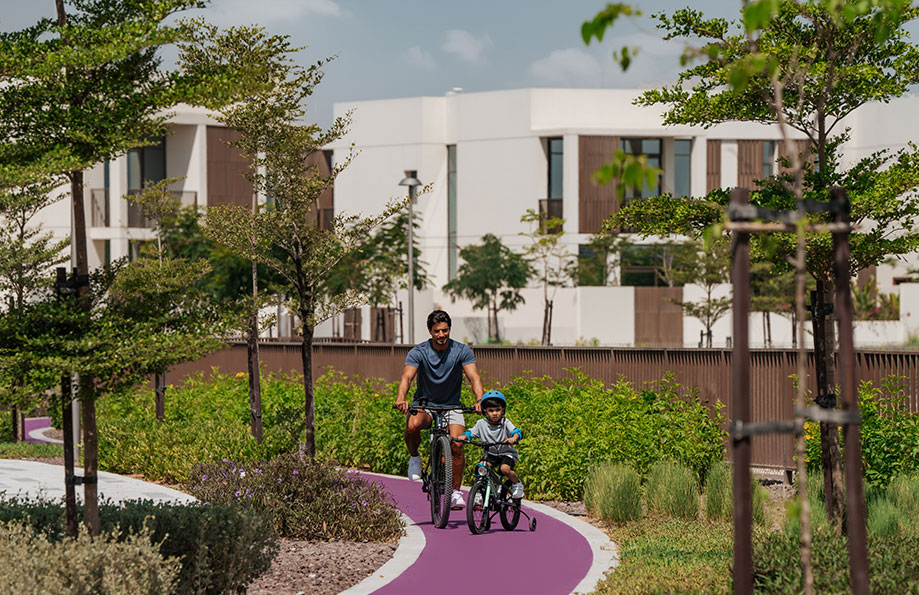
Abu Dhabi’s real estate market has entered a new phase, one where the presence of nature is no longer treated as a scenic bonus but as a defining feature of a project’s long-term value. Buyers are asking different questions than they did a decade ago. Instead of focusing only on square footage or proximity to the city centre, they want to know how a community connects to its natural surroundings, how it manages its environmental footprint, and whether daily life there feels calmer and healthier than in a conventional urban development. This shift is reshaping how developers plan new communities, how investors evaluate them, and how entire neighbourhoods are marketed to a buyer base that has grown far more selective than it was even five years ago.
Part of this change can be traced back to lifestyle habits formed during periods of restricted travel and remote work, when access to open space, fresh air, and quiet surroundings became a daily concern rather than an occasional weekend interest. That shift in expectations did not fade once ordinary routines returned. Instead, it hardened into a lasting preference that now shapes how buyers compare one development against another, and it has pushed nature from the edge of the property brochure to the centre of the pitch.
A Changing Definition of Luxury
For years, luxury in the Gulf region was associated with scale. Bigger towers, longer marinas, and more elaborate amenities were the standard markers of an upscale address. That definition is being rewritten. Today, a growing share of buyers describe luxury in terms of space, light, air quality, and access to natural landscapes rather than sheer size. A private beach, a mangrove channel, or a quiet green corridor now carries more weight in a buyer’s decision than an additional floor of retail.
This change is not limited to a small niche of environmentally conscious buyers. Analysts covering the region’s property sector have pointed out that wellness-oriented design, natural ventilation, and access to open water or greenery are becoming standard expectations across the mid to upper segments of the market, not exceptions reserved for a handful of boutique projects. Even buyers who are not actively searching for a sustainable lifestyle now factor in questions about density, noise, and proximity to open land when comparing similar price points.
This broader definition of luxury also changes how a property is used day to day. A home valued for its natural surroundings tends to be lived in differently than one valued purely for its finishes or its address. Residents spend more time outdoors, walk rather than drive for short trips, and treat shared green spaces as an extension of their own home rather than as a passive amenity. Developers have started to design with that pattern of use in mind, rather than assuming buyers will simply admire a view from behind glass.
Nature as a Driver of Investment Value
Developers have taken note of this shift because it directly affects resale value and rental demand. Properties positioned near protected coastlines, mangrove forests, or low-density green zones tend to hold their value more consistently, since the natural features around them cannot be replicated once the surrounding land is built out. Scarcity of untouched landscape has become a genuine asset class within the wider real estate conversation, alongside more traditional measures such as location and unit specification.
There is also a practical dimension to this trend. Communities built around natural water systems and native vegetation often require less artificial cooling and irrigation, which translates into lower long-term operating costs for residents. For investors comparing similar price points, that difference in running costs can influence which development is seen as the stronger long-term hold. Lower service charges and reduced maintenance demands on shared landscaping can matter just as much to a long-term investor as the initial purchase price.
Rental demand tells a similar story. Tenants relocating to Abu Dhabi for work increasingly weigh quality of life alongside commute time, and a community built around open water or protected greenery often commands a premium in the rental market even when unit sizes are comparable to denser alternatives. Property managers report that units in nature-led communities tend to see longer average tenancies, since residents who choose that lifestyle are less inclined to move once they have settled into it.
Abu Dhabi’s Expanding Portfolio of Nature-Led Developments
Abu Dhabi has responded to this demand by developing a number of island and waterfront communities designed around existing ecosystems rather than against them. These projects preserve mangrove channels, natural tidal flows, and native coastal vegetation as part of the master plan, rather than clearing the land and reintroducing greenery afterward. This approach has become one of the clearest signals of luxury living in Abu Dhabi, where residents can experience low-density island life with direct access to protected natural surroundings, all within a short distance of the capital’s commercial and cultural hubs.
What sets these communities apart is not simply their location near water, but the deliberate decision to design around the land’s original ecology. Preserving mangrove systems supports biodiversity, helps filter coastal water naturally, and reduces the erosion risks that come with heavily engineered waterfronts. For residents, the result is an environment that feels distinct from the density of the mainland, without sacrificing access to schools, retail, and business districts.
This kind of planning also requires a different pace of development than a conventional high-rise project. Roads, drainage, and utility corridors have to be routed around existing tidal channels and vegetation rather than through them, and construction schedules are often adjusted to avoid disturbing sensitive breeding or nesting periods. The result is a slower, more deliberate build-out, but one that protects the very features buyers are paying a premium to be near once the community is complete.
The Everyday Experience of Living Near Protected Nature
Beyond investment metrics, the appeal of these communities comes down to daily life. Mornings that start with a walk along a mangrove boardwalk, evenings spent watching herons and other coastal birds return to their roosts, and weekends built around paddleboarding or cycling rather than driving to a mall are becoming part of the pitch that draws buyers to these addresses. That kind of routine is difficult to replicate in a dense urban tower, no matter how well appointed the building itself may be.
Families in particular tend to cite this everyday texture as a deciding factor. Children growing up with direct access to open space and natural surroundings, rather than only structured indoor amenities, is frequently mentioned by buyers as a reason for choosing a nature-led community over a more centrally located but denser alternative. Community operators have responded by building nature education programmes and guided walks into their calendars, turning the surrounding ecosystem into an active part of community life rather than a passive backdrop.
What Buyers Should Look For in a Nature-Led Community
Not every project that markets itself as sustainable delivers on that promise in practice. Buyers evaluating nature-led communities are increasingly encouraged to look past marketing language and examine specific details, such as whether mangrove areas are protected under a formal conservation plan, whether construction methods limit disruption to tidal patterns, and whether public and private green space is genuinely accessible rather than reserved for a small number of units.
It is also worth examining how a community balances density with open space. A development that preserves a strip of greenery along its edges while packing high-rise towers into the interior offers a different lifestyle from one that limits building height and density across the entire masterplan. The latter tends to deliver a more consistent sense of space and quiet, which is often what buyers are actually seeking when they cite nature as a priority.
Buyers should also consider governance. A homeowners’ association or community management structure with a clear, funded mandate to maintain natural areas is a stronger indicator of long-term commitment than marketing material alone. Conservation features that depend entirely on goodwill, without a dedicated budget line or maintenance schedule, are more likely to be scaled back once a development moves past its launch phase.
The Long-Term Outlook
As Abu Dhabi continues to attract both regional and international buyers, the developments that treat natural landscape as a core design principle, rather than a marketing afterthought, are likely to command sustained interest. Climate considerations, rising expectations around wellbeing, and a broader cultural shift toward slower, more grounded ways of living all point in the same direction. Nature-led communities are no longer a niche segment of the market. They are becoming one of the clearest indicators of where long-term value in Abu Dhabi real estate is headed.
For anyone assessing where to buy or invest next, the presence of protected natural surroundings, thoughtful density planning, and genuine ecological integration should now sit alongside price and location as a core part of the decision.